




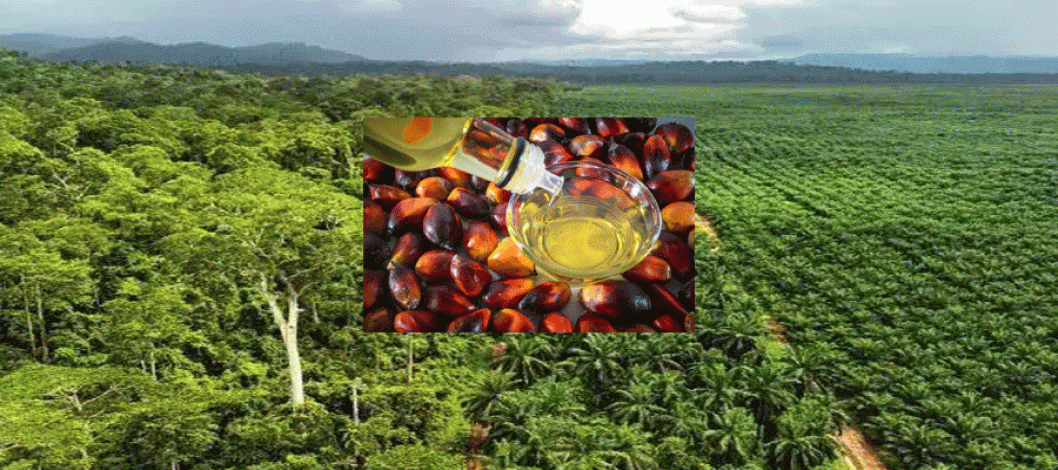
This product has been used for thousands of years in Africa. But the beginnings of the transatlantic slave trade in the 16th and 17th centuries brought people, food, and products outside Africa. Palm oil was used to feed enslaved captives on slave ships. It was also used as a cosmetic — before they were auctioned off in America, it was applied to make the skin of enslaved people look shiny and healthier. It also played a role in the colonial scramble for Africa — palm oil was an important motivation for European empires to seize territory, trying, for instance, in Nigeria and Cameroon, to secure and monopolise access to oil-producing regions. Later, it reached Southeast Asia — in the 19th century, the British began to expand their control over the Indian Ocean area. They transferred oil palm seeds and other plants they thought were economically useful across the region. The Dutch were also involved — a consignment of oil palm reached the then-Dutch East Indies in 1848, taking root there.
Who were the workers growing this crop?
■ Initially, in Southeast Asia, there was little local interest in palm oil because coconut was a well-established industry. In the 20th century, when prices for all commodities, but particularly edible oils, began to skyrocket around WWI, high prices for oil drew Europe-based companies to invest in oil palm plantations in the region. They copied the established business model for rubber, where colonial governments took land from local people and leased it to European companies — they then imported workers from India, Java, or China, often under indenture contracts. The wages these plantations paid were simply not high enough to attract locals — they thus relied on recruiting labour from places with fewer opportunities, limited access to land, overpopulation, and often, famine conditions, which compelled people to seek overseas work, even at low wages.
How did palm oil then get involved in post-WWII development plans?
■ In the 1950s-60s, the World Bank and former colonial powers, like the British and French, began looking for projects that could create jobs in ex-colonies and increase supplies to address what many believed was an impending global food crisis. Being a labour-intensive crop, the palm oil industry provided a lot of employment while creating a material useful for food and other products. Eventually, that became part of the development narrative of post-colonial economies like Malaysia, Indonesia, Papua New Guinea, etc. Instead of rejecting colonial crops, independent governments embraced them as a source of revenue that could be channelled into other development projects. See more.
Source: Online/OFA







Comment Now